Open four real estate sites and search Mount Vernon, New York, and you will get four different answers to what should be a simple question: what does a home here cost. One site tells you the average is pushing $580,000. Another puts the median sale price at $563,000. A third lists the citywide median at $384,950. A fourth has it at $357,000. None of these sites made an error. They are each measuring something different, and the gap between them is the most useful piece of information a Mount Vernon buyer can have, because it points directly at where this market actually splits in two.
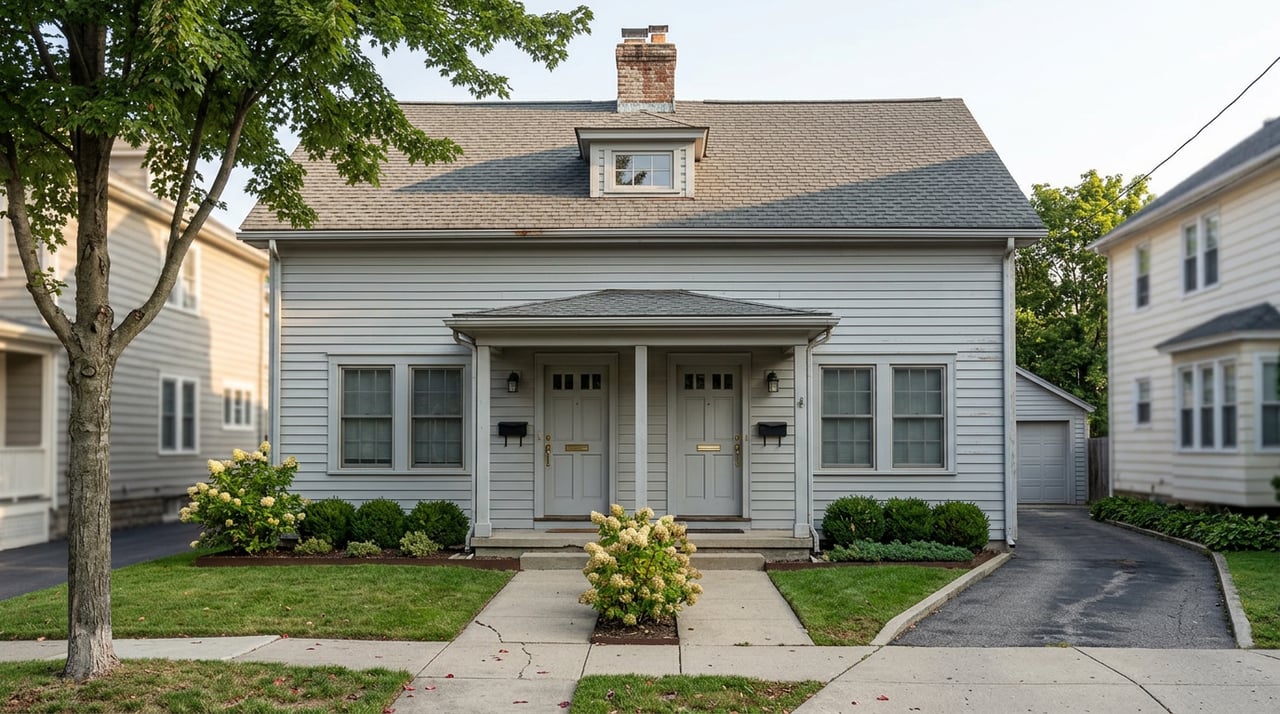
That split is not a data quirk. Mount Vernon runs two housing markets under one zip code: a single-family market of turn-of-the-century colonials, co-ops, and starter homes, and a much less discussed market of legal two-, three-, and four-family houses. The two trade on different logic, at different price points, to different kinds of buyers. If you are comparing Mount Vernon to another Westchester town using one blended number, you are averaging together two markets that do not belong in the same sentence.
The Four Numbers, One City
Here is what each source actually measured, and when.
| Source | What it measures | Figure | As of |
|---|---|---|---|
| Zillow (ZHVI) | Smoothed average home value, all property types | $579,771, up 4.1% year over year | Updated late April 2026 |
| Redfin | Median sale price, closed transactions | $563,000, up 5.1% year over year | March 2026 |
| Homes.com | Citywide median home price | $384,950 | July 2026 |
| Movoto | Median list price | $357,000 | February 2026 |
The Zillow and Redfin figures sit far above the Homes.com and Movoto figures because averages and sale-price medians pull toward whatever recently closed, while list-price medians pull toward whatever is currently sitting on the market waiting for a buyer. In a city with a deep inventory of modest single-family homes and co-ops, most active listings sit well under $400,000. But the transactions that actually close in a given month include a smaller, pricier slice: multi-family houses and larger colonials that can run past $1 million.
The other factor is volume. Redfin recorded 30 home sales in Mount Vernon in March 2026, up from 25 the prior March. A separate Redfin count, pulled from MLS data as of mid-July 2026, put the prior month's closings at 41. Either way, this is a market where a few dozen sales define the monthly median. When your sample size is that small, one $2 million multi-family sale can move the average meaningfully in a way it never would in a market closing hundreds of homes a month.
What's Actually Moving the Average
The clearest proof of this is not citywide. It is inside a single Mount Vernon neighborhood.
North Side, the area centered on Fleetwood Metro-North Station, posted a median home price of just $220,000 as of May 2026, with the trailing 12-month median sale price at $215,000, up 13% from the prior 12 months. That is a genuinely affordable number for a Westchester neighborhood with direct rail access into Manhattan.
But the same neighborhood, in the same window, had 15 multi-family homes for sale priced between $599,000 and $1,749,000. Same streets. Same train station. A price range nearly eight times the single-family median, because a legal three-family house is not competing on the same axis as a starter colonial. It is priced on the rent roll it can support, not on square footage or curb appeal alone.
North Side itself is worth describing plainly rather than as a statistic. It is a prewar pocket of colonials and Tudors from the 1920s, bordered by the Bronx River and the Hutchinson River, built around the Fleetwood station that puts Manhattan roughly 30 minutes away by train. Residents shop at Foodtown and Fresh Harvest, grab a slice at Johnny's Pizzeria, and can walk to Willson's Woods Park or Hartley Park. It is a lived-in neighborhood, not a spreadsheet abstraction, and that context matters because the price split we are describing runs through actual streets a buyer will actually walk.
The Two Markets Inside One City
Zoom back out to the whole city and the pattern holds. As of July 2026, Mount Vernon had 64 multi-family homes on the market, priced from $390,000 to $2.5 million, spending an average of 83 days on the market. Compare that to the roughly 40-day average for the broader market that Zillow and Redfin both reported. Multi-family properties sit longer, which tells you two things: there is less competitive bidding pressure on this segment, and a buyer who understands what they are looking at has more room to negotiate and more time to do real diligence on rent rolls, certificates of occupancy, and separate utility metering.
This is also where owner-occupant financing changes the math entirely. A buyer purchasing a legal two-to-four-unit property and living in one unit can typically qualify for FHA financing with as little as 3.5% down, or zero down through a VA loan for eligible veterans, rather than the larger down payment and investor-rate terms required on a pure rental purchase. The tradeoff is an occupancy requirement, generally at least 12 months, before the owner can move out and rent the full building. Rental income from the other unit or units gets applied directly against the mortgage, which is a fundamentally different financial position than buying a single-family home at the same price and covering the full payment alone.
One recent Mount Vernon listing illustrates the entry point: a renovated two-family house at 25 Monroe Street, with two one-bedroom, one-bath units, listed at an estimated $336,000. That is below the citywide single-family median list price and buys two rentable units instead of one.
The Institutional Money Making the Same Bet
Small buyers are not the only ones who noticed Mount Vernon's multi-family math. In 2023, Alexander Development Group, The Bluestone Organization, and J.P. Morgan Global Alternatives opened 42 Broad, a 16-story, 249-unit building in the Fleetwood section, three blocks from the same Metro-North station that anchors North Side. Designed by Perkins Eastman, it became the world's largest market-rate multifamily high-rise to achieve Phius Passive House certification, built to use up to 80% less energy for heating and cooling than a comparable existing building. By late 2024, it was reported at roughly 75% leased.
The same developer has since moved on a 21-story, 350-unit mixed-use tower at 140 E. Prospect Avenue, near Mount Vernon East station, seeking a new transit-oriented zoning district for the site. Notably, the developer is not requesting a PILOT agreement to reduce the project's property taxes.
"We want to pay full freight. Why do we want to pay full freight? Because the city needs the funds."
That is Marc Alexander, the project's developer, explaining the decision. He also framed the broader shift this way: Mount Vernon has spent decades building multifamily housing almost exclusively as affordable housing, and market-rate multifamily at this scale is new territory for the city.
None of this means a small two-family purchase behaves like a 249-unit institutional building. The financing, the tenant profile, and the risk are entirely different. But the underlying bet is the same one a buyer makes on a smaller three-family house near the same train line: that Mount Vernon's transit access and housing stock support real rental demand, priced well below what the same commute costs in Manhattan or lower Westchester.
A Couple of Follow-Up Questions
Does the lower "median" number mean Mount Vernon is undervalued? Not exactly. It means the citywide median is doing a lot of work in a market with a small number of monthly sales, and it is being pulled toward the volume of modest single-family homes and co-ops that make up most of the active inventory. A buyer should compare against listings and recent sales for the specific property type they want, not the blended citywide figure.
Do I have to live in the building to get owner-occupant financing on a two-family house? Generally yes. FHA and VA owner-occupant loans on 2-4 unit properties typically require the buyer to live in one unit for about a year before renting it out or moving on. The tradeoff for that commitment is a lower down payment and better terms than an investor loan would offer on the same property.
If you are weighing a single-family home against a two- or three-family property in Mount Vernon, the numbers behave differently enough that they deserve separate comps and a separate conversation about financing. That is exactly the kind of comparison HLRE works through with buyers across Westchester and New York City every day. Let's Connect.